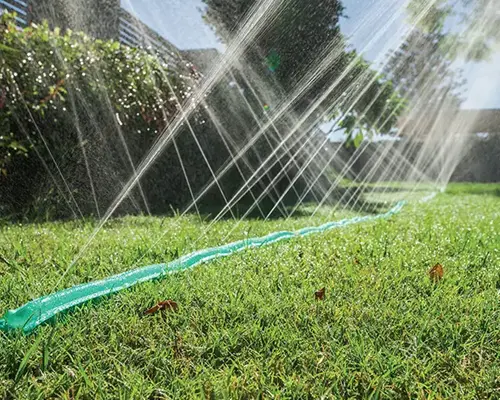

In the modern agricultural landscape, sustainability is no longer just a buzzword but a necessity. Greenhouse farming, in particular, faces the dual challenge of maximizing yield while minimizing environmental impact. Water scarcity, energy consumption, and precise nutrient delivery are critical factors that determine the success of a greenhouse operation. This is where advanced irrigation technology steps in to bridge the gap between high productivity and ecological responsibility.
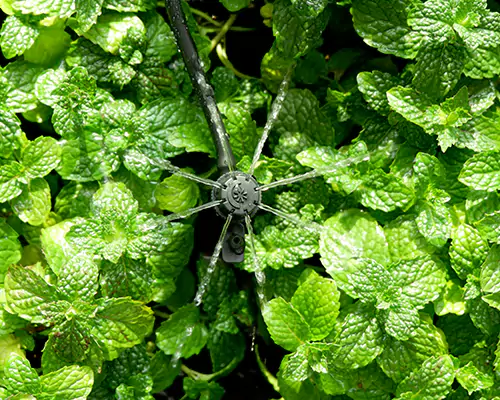
Micro sprinkler sprayers have emerged as a cornerstone technology in achieving these goals. They play a pivotal role by providing a fine, uniform mist that ensures optimal water distribution without wastage. By targeting water directly to the plant root zone and foliage as needed, these systems drastically reduce runoff and evaporation. For growers looking to enhance crop quality and operational efficiency, understanding the function and specifications of these devices is the first step toward a more sustainable future. At Micro Mist Irrigation Products Co., Ltd., we have dedicated decades to perfecting this technology to meet the rigorous demands of greenhouses worldwide.
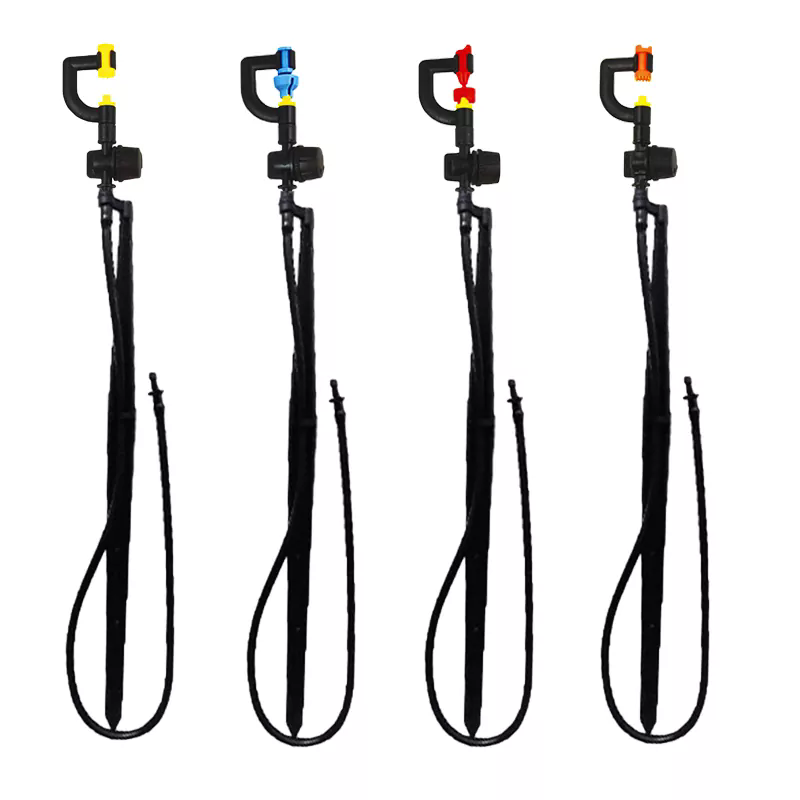
Sustainability in a greenhouse context goes beyond just saving water. It encompasses energy efficiency, reduced chemical runoff, improved worker safety, and optimized plant growth cycles. Micro sprinkler sprayers address all these facets by delivering water and nutrients in a controlled, precise manner. Unlike flood irrigation or high-volume sprinklers, micro systems operate at lower pressures and use significantly less water, directly contributing to a reduced carbon footprint for the farming operation.
Our approach at the factory level ensures that every sprinkler head is engineered for uniformity. This uniformity is the secret ingredient to sustainability. When every plant receives the exact same amount of irrigation, there is no overwatering in some sections and underwatering in others. This leads to homogeneous crop growth, reduces the incidence of disease caused by standing water, and lowers the overall input costs for the grower. By integrating these systems, greenhouses can maintain production levels even during drought conditions, securing food supply chains and ensuring business continuity.
The environmental benefits are substantial. Here is a breakdown of how these systems contribute to a greener operation:
At Micro Mist Irrigation Products Co., Ltd., we continuously refine our manufacturing processes to enhance these sustainable attributes. Our factory utilizes high-grade materials that resist UV degradation and chemical corrosion, ensuring that the irrigation systems last for years, reducing plastic waste associated with frequent replacements. This long-term durability is a core component of sustainable design, proving that quality and ecology go hand in hand.
The technical specifications of a micro sprinkler are not just numbers on a datasheet; they are the defining factors that determine the success or failure of an irrigation strategy. Parameters such as flow rate, droplet size, diameter of coverage, and operating pressure directly influence how water interacts with the soil and the plant. For instance, a sprinkler producing very fine droplets is ideal for seed germination and misting, while a slightly larger droplet might be necessary for penetrating dense crop canopies.
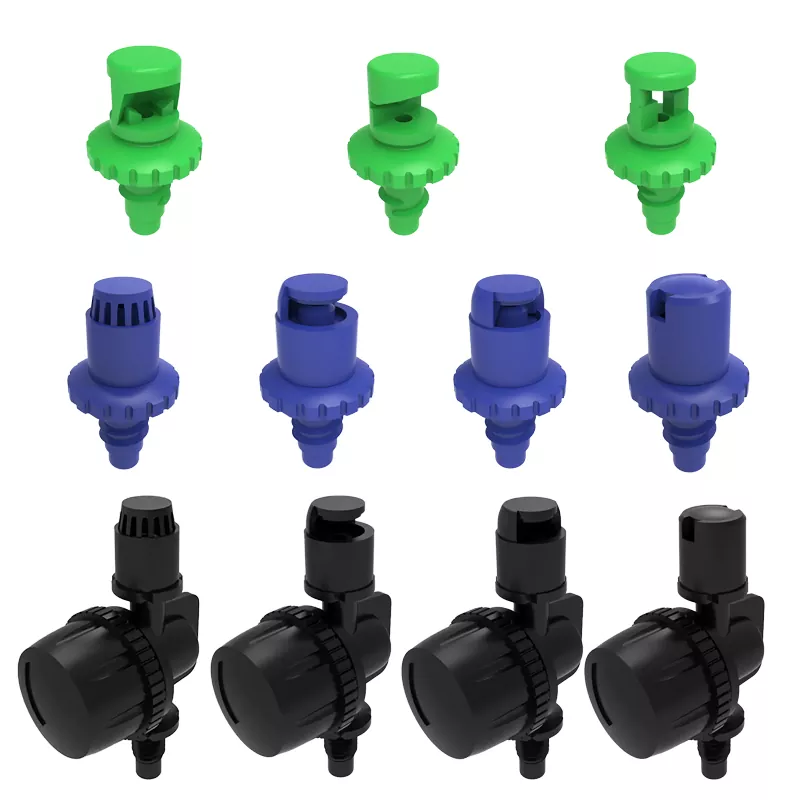
Our product line is designed to offer versatility across different crop types and growth stages. We understand that irrigating delicate lettuce seedlings requires a different approach than watering mature tomato plants. Therefore, our factory produces a range of sprinklers with specific attributes. Below is a detailed table showcasing some of our standard micro sprinkler sprayer specifications, highlighting how each parameter serves a specific agricultural purpose.
| Model Series | Flow Rate (L/h) | Operating Pressure (Bar) | Wet Diameter (m) | Droplet Characteristic | Ideal Application |
| MMS-360 Series | 30 - 60 | 1.5 - 2.5 | 3 - 5 | Fine Mist | Seedling nurseries, cooling, high humidity crops |
| MMS-180 Series | 50 - 90 | 2.0 - 3.0 | 4 - 7 | Medium Fine | Leafy greens, ground covers, bedded vegetables |
| MMS-90 Series | 70 - 120 | 2.5 - 3.5 | 6 - 9 | Coarse Mist | Taller row crops, potted plants, soil saturation |
| MMS-Diffuser | 40 - 80 | 2.0 - 3.0 | 2 - 4 | Adjustable | Targeted irrigation, areas with wind interference |
Understanding these specs allows growers to customize their irrigation layouts for maximum efficiency. For example, using the MMS-360 series with its fine mist ensures that water droplets stay suspended in the air long enough to cool the environment without drenching the soil excessively, which is perfect for propagation houses. On the other hand, the MMS-90 series provides the volume needed to satisfy the transpiration demands of large, fruit-bearing plants without creating runoff.
Our commitment to precision engineering means that every sprinkler we produce maintains these specifications within a tight tolerance. This consistency is vital when designing a system that relies on hydraulic balance. If one sprinkler outputs more water than its neighbor, it creates wet and dry spots, leading to inconsistent crop quality. By using our factory-calibrated components, growers can achieve a uniformity coefficient of over 90 percent, ensuring that every plant thrives, which ultimately boosts the overall health and profitability of the greenhouse.
The debate between adopting new technology versus sticking with traditional methods like hand watering, drip tape, or impact sprinklers is common among greenhouse operators. While drip irrigation is excellent for water conservation at the root zone, it fails to provide the canopy cooling and humidity control that many crops require. Conversely, large impact sprinklers waste water and can damage delicate plants with heavy droplets. Micro sprinkler sprayers offer a hybrid solution that captures the benefits of both while eliminating the drawbacks.
Choosing the right irrigation method is a strategic decision that impacts labor costs, plant health, and resource management. Micro sprinklers stand out because they automate the process of creating an ideal microclimate. They are not just irrigation devices; they are environmental control tools. When installed overhead, they can lower the ambient temperature during heat waves, reducing plant stress and preventing bolting in sensitive crops like lettuce and herbs. This active climate management is something that passive systems like drip tape simply cannot provide.
Here are the key reasons why our clients are making the switch to micro sprinkler technology for their greenhouses:
At MMIP, we have seen firsthand how greenhouses transform after switching to our systems. The precision and control offered by our micro sprinklers allow growers to push the boundaries of what is possible in their climate. We design our factory components to be modular and easy to install, ensuring that even a large-scale conversion from traditional methods is smooth and hassle-free. The long-term savings in water, energy, and labor make this not just an environmentally sound choice, but a financially superior one.
The journey toward sustainable greenhouse farming is paved with smart technology choices. Micro sprinkler sprayers have proven themselves to be an indispensable tool in this journey, offering unparalleled control over water application, microclimate, and resource management. They empower growers to produce higher quality crops while simultaneously reducing their environmental footprint. From conserving precious water resources to lowering energy bills, the advantages are clear and measurable.
As we look to the future of agriculture, efficiency and sustainability will remain at the forefront. By adopting advanced irrigation solutions, greenhouse operators can ensure their businesses remain resilient and profitable. We invite you to explore how our products can specifically benefit your operation. Contact Micro Mist Irrigation Products Co., Ltd. today to discuss your greenhouse layout and discover the perfect irrigation setup tailored to your crops and climate goals. Let us help you cultivate a more sustainable and prosperous future.
Micro sprinkler sprayers play a fundamental role in water conservation by delivering water in a controlled, precise pattern directly where it is needed. Unlike traditional irrigation methods that can lose significant amounts of water to evaporation, wind drift, or runoff, micro sprinklers operate at low flow rates and pressures. The fine droplets they produce have a lower trajectory, meaning they are less susceptible to evaporation before reaching the plant or soil surface. Additionally, because they provide uniform coverage, growers can avoid overwatering to compensate for dry spots. This targeted approach can lead to water savings of 50 to 70 percent compared to conventional overhead systems, making them a cornerstone of water-efficient greenhouse management.
Selecting the correct micro sprinkler depends on several factors including crop type, growth stage, and desired microclimate. For delicate crops like seedlings and leafy greens that require high humidity and gentle watering, a sprinkler producing a fine mist (such as our MMS-360 series) with a lower flow rate is ideal. For taller, more established crops like trellised tomatoes or peppers, a sprinkler with a coarser droplet and higher flow rate (like our MMS-90 series) ensures water penetrates the foliage and reaches the root zone. You should also consider the wet diameter needed to cover your bed width without overspray onto walkways. Consulting with an irrigation specialist, like the team at Micro Mist Irrigation Products Co., Ltd., can help you match the sprinkler specifications to your specific crop requirements and greenhouse layout.
Yes, absolutely. One of the greatest advantages of micro sprinkler systems is their multifunctionality. Beyond standard irrigation, they are highly effective for climate control. During hot weather, operating the system for short bursts can create a cooling effect through evaporation, reducing ambient temperatures and plant stress—a process often called evaporative cooling. They are also used for frost protection; a light continuous spray can form an ice layer that insulates the plant tissue from freezing temperatures. Furthermore, these systems are excellent for fertigation and chemigation, allowing for the uniform application of liquid fertilizers and pesticides directly through the irrigation lines, which saves labor and ensures even distribution.
Maintaining a micro sprinkler system is generally straightforward but essential for long-term performance. The primary maintenance task is ensuring the water is properly filtered to prevent the small orifices from clogging. Regular visual inspections of the greenhouse should be conducted to check for any sprinklers that are not spinning correctly or are blocked. Depending on water quality, periodic flushing of the lines is recommended to remove any sediment buildup. At the end of a cropping cycle, it is good practice to inspect the sprinklers and replace any damaged components. Because our factory uses durable materials, the need for replacements is minimized, but routine checks help sustain the high uniformity and efficiency that the system was designed to provide.
Micro sprinkler systems are highly adaptable and suitable for virtually all greenhouse sizes and structures, from small polytunnels and hobby houses to large-scale commercial glass or polycarbonate structures. The modular nature of the components—including the sprinklers, tubing, and fittings—allows for customized layouts that fit any dimension. For smaller greenhouses, a simple system connected to a garden hose and timer can suffice. For larger operations, the systems can be zoned to manage water pressure and flow effectively, ensuring every area receives adequate coverage. The key is proper system design to account for pressure losses and coverage patterns. Our team at Micro Mist Irrigation Products Co., Ltd. can assist in designing a system that maximizes efficiency regardless of your greenhouse's specific footprint.
Copyright © 2025 Micro Mist Irrigation Products Co., Ltd. All Rights Reserved.