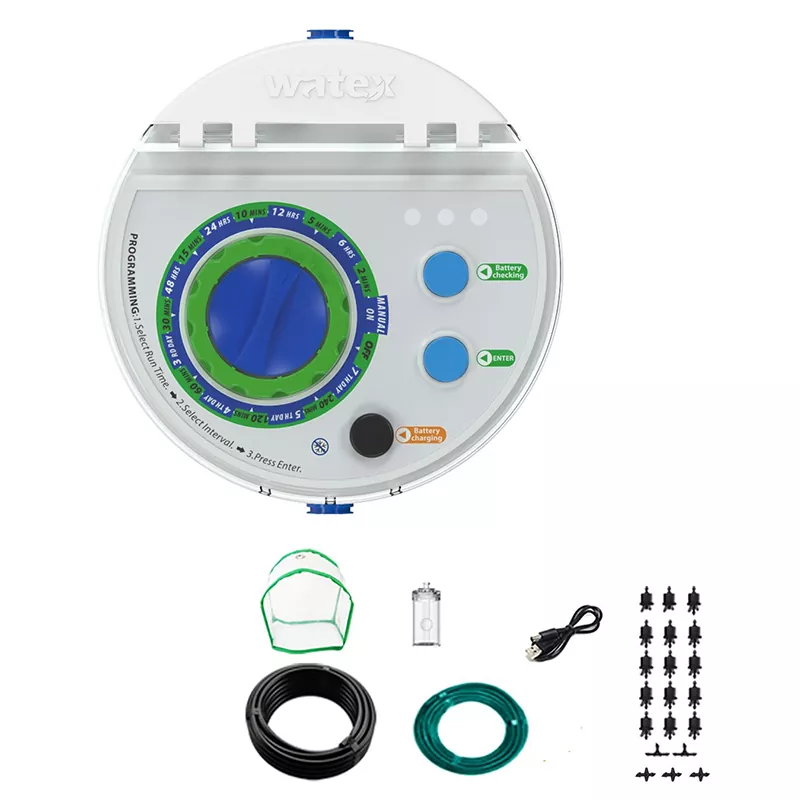

Greenhouse irrigation is one of the most critical factors determining crop yield, plant health, and operational cost efficiency. Growers worldwide are under increasing pressure to reduce water waste while delivering precise moisture levels across diverse plant species and canopy densities. Micro Sprinkler Sprayers have emerged as a proven engineering solution that directly addresses these challenges, enabling consistent coverage patterns, adjustable flow rates, and reduced evaporative loss in enclosed growing environments. At Micro Mist Irrigation Products Co., Ltd., our engineering team has spent years refining the mechanical design, material selection, and distribution geometry of our products to meet the demands of commercial greenhouse operations at every scale.
This article explores how Micro Sprinkler Sprayers deliver measurable improvements in water distribution efficiency, what technical specifications matter most for greenhouse deployment, and how our solutions compare against conventional overhead irrigation methods. Whether you manage a small propagation house or a multi-hectare commercial greenhouse, the product details and operational guidance covered here will help you make an informed irrigation decision backed by real-world performance outcomes.

Table of Contents
Conventional greenhouse irrigation has long relied on overhead sprinklers, drip lines, or manual hose watering. Each of these methods carries inherent limitations that become increasingly costly as greenhouse size and crop diversity grow. Overhead sprinklers typically deliver large water droplets at high pressure, resulting in uneven distribution, foliage damage, and elevated fungal disease risk from excessive leaf wetness. Drip systems, while precise for row crops, struggle to deliver adequate coverage in broadcast seeding beds, propagation trays, or hanging basket arrangements.
Micro Sprinkler Sprayers operate on a fundamentally different set of engineering principles. By breaking water into fine, controlled spray patterns at low operating pressures, our products achieve a combination of coverage uniformity and water conservation that conventional systems cannot match. The key differentiators include:
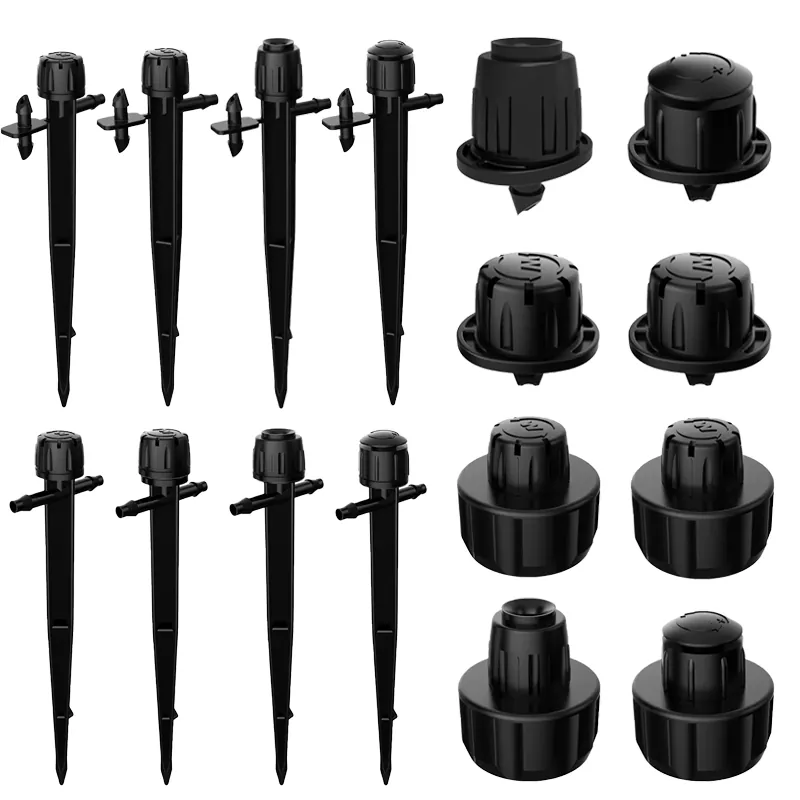
Beyond these mechanical attributes, the installation geometry of our products is designed for flexibility. Stake-mounted, hanging, and riser-threaded configurations allow growers to position emitters at canopy level, mid-height, or overhead without purchasing entirely different product families. This modularity reduces inventory complexity and allows a single product platform to serve multiple crop zones within the same greenhouse structure.
The low-trajectory spray produced by ground-level or mid-canopy mounted Micro Sprinkler Sprayers also reduces the micro-climate disruption that high-pressure overhead irrigation causes. Maintaining stable air temperature and humidity profiles within greenhouse bays is directly linked to disease suppression and consistent plant development. At Micro Mist Irrigation Products Co., Ltd., our research and development investment is concentrated on refining these core performance attributes to meet the evolving needs of greenhouse growers across temperate, tropical, and arid growing regions worldwide.
Achieving genuine uniformity in water distribution requires more than simply placing sprinkler heads at regular intervals. True uniformity is a function of nozzle flow rate consistency, spacing geometry, operating pressure stability, and the interaction between overlapping spray patterns. Our engineering approach addresses each of these variables with deliberate precision, resulting in distribution uniformity coefficients consistently above 90% in controlled greenhouse test environments.
The foundation of uniform distribution begins with nozzle manufacturing tolerances. Our production facility uses injection-molded nozzle inserts with orifice diameter tolerances held to plus or minus 0.02 millimeters. This level of consistency ensures that flow rate variation between individual emitters within the same production batch remains below 3%, a critical requirement for pressure-compensating lateral line designs where small flow deviations accumulate into significant distribution errors over long runs.
Modern greenhouse operations rarely grow a single crop type. Our product range supports multi-zone design through color-coded nozzle inserts indicating flow rate class, enabling quick visual identification and easy field swapping between zones with different water demand profiles. Sector-adjustable deflectors limit spray coverage to defined bed widths, preventing over-spray onto pathways and non-target areas that would otherwise increase water consumption without irrigation benefit.
Our applications engineering team at Micro Mist Irrigation Products Co., Ltd. provides layout design support for new greenhouse installations, including hydraulic calculations, spacing recommendations, and zone mapping based on your specific crop program and greenhouse geometry.
Understanding product specifications in detail is essential for matching irrigation hardware to greenhouse requirements. The following tables present the key technical parameters of our primary product models, organized by application category to support accurate product selection.
| Model | Flow Rate (L/h) | Operating Pressure (bar) | Wetted Radius (m) | Pattern | Connection | Material |
| MM-S30 | 30 | 1.0 - 2.5 | 0.8 - 1.2 | 360 degrees full circle | 4mm barb / 1/2 inch thread | UV-PP + SS insert |
| MM-S60 | 60 | 1.0 - 2.5 | 1.2 - 1.8 | 360 degrees full circle | 4mm barb / 1/2 inch thread | UV-PP + SS insert |
| MM-S90 | 90 | 1.5 - 3.0 | 1.5 - 2.2 | 360 / 180 / 90 adjustable | 4mm barb / 1/2 inch thread | UV-PP + SS insert |
| MM-S120 | 120 | 1.5 - 3.0 | 1.8 - 2.5 | 360 / 180 / 90 adjustable | 4mm barb / 3/4 inch thread | UV-PP + SS insert |
| MM-S160 | 160 | 2.0 - 3.5 | 2.2 - 3.0 | 360 degrees full circle | 3/4 inch thread | UV-PP + SS insert |
| Model | Regulated Flow Rate (L/h) | Compensation Range (bar) | Wetted Radius (m) | Anti-Drain Valve | Max Lateral Run (m) |
| MM-PC40 | 40 plus or minus 3% | 1.0 - 3.5 | 1.0 - 1.4 | Standard | 80 |
| MM-PC80 | 80 plus or minus 3% | 1.0 - 3.5 | 1.4 - 2.0 | Standard | 80 |
| MM-PC120 | 120 plus or minus 3% | 1.5 - 3.5 | 1.8 - 2.5 | Standard | 100 |
| Mount Type | Stake Height Options (cm) | Compatible Series | Recommended Application |
| Ground stake | 20 / 30 / 40 | MM-S, MM-PC | Propagation beds, seedling trays, low canopy crops |
| Hanging bracket | Adjustable 0 - 60 degrees | MM-S, MM-PC | Hanging baskets, vertical growing systems |
| Riser thread | 15 / 30 / 50 / 100 | All series | Bench crops, mid-height canopy, retrofit installations |
| Overhead lateral | Ceiling mounted | MM-S120, MM-S160 | Large-area coverage, tall crops, nursery stock |
| Parameter | Acceptable Range | Recommended Pre-Treatment |
| pH | 4.5 - 8.5 | None required within range |
| EC (mS/cm) | 0.1 - 3.5 | Dilution if above 3.5 |
| Suspended solids (mg/L) | Below 80 | 120-mesh screen filter recommended |
| Iron content (mg/L) | Below 0.3 | Oxidation filter if above 0.3 |
| Water temperature (deg C) | 4 - 45 | Insulate lines in sub-zero ambient conditions |
These specifications represent our standard product configurations. Custom flow rates, alternative orifice sizes, and non-standard connection formats are available through our factory order program at MMIP for orders meeting minimum quantity requirements.
Water distribution precision is not merely an operational convenience. It is a foundational agronomic variable that determines whether crops reach their genetic yield potential or fall short due to stress events, disease pressure, or nutrient availability failures. The relationship between irrigation uniformity and crop outcome is well-established in horticultural science, and the economic implications for commercial greenhouse operators are significant.
Uneven water distribution creates a spectrum of plant stress conditions simultaneously across a single growing area. Plants receiving excess water experience anaerobic root zone conditions, reduced nutrient uptake efficiency, and elevated susceptibility to root rot pathogens. Plants receiving insufficient water respond with stomatal closure, reduced photosynthetic rate, and accelerated maturity that diminishes marketable yield. When both stress conditions occur simultaneously in the same greenhouse bay, any corrective irrigation adjustment benefits one group of plants while worsening conditions for the other.
Research in commercial greenhouse production consistently demonstrates that improving distribution uniformity coefficient from 75% to 90% or above correlates with measurable improvements across key performance indicators:
At Micro Mist Irrigation Products Co., Ltd., we support growers in building the business case for irrigation system upgrades by providing detailed hydraulic design documentation, expected distribution uniformity data for proposed layouts, and reference data from comparable installations in similar crop programs.
Even the highest-performing irrigation hardware will underperform if installed incorrectly or maintained inadequately. Proper installation and systematic maintenance are the two most controllable factors in achieving and sustaining the distribution uniformity performance that makes our products a worthwhile investment.
| Maintenance Task | Frequency | Method | Expected Outcome |
| Screen filter inspection and cleaning | Weekly during peak season | Remove, rinse, brush, reinstall | Prevents pressure drop and flow restriction |
| Emitter visual inspection | Monthly | Observe spray pattern during operation | Early detection of clogging or wear |
| Emitter nozzle cleaning | Seasonally or as needed | Soak in dilute acid solution, flush with clean water | Removes mineral scale deposits from orifice |
| Lateral line flushing | Seasonally | Open end caps, run full-flow flush cycle | Removes accumulated sediment from line ends |
| Distribution uniformity check | Annually | Catch can test across representative zones | Confirms system performance meets design specification |
| Full system pressure test | Annually before planting season | Pressure gauge at zone headers and line ends | Identifies leaks, blockages, and regulator drift |
Our technical support team at Micro Mist Irrigation Products Co., Ltd. is available to assist with installation planning, troubleshooting, and maintenance program development for greenhouse operators using our products in commercial-scale applications.
Precision water distribution is the cornerstone of productive, resource-efficient greenhouse crop production. Micro Sprinkler Sprayers deliver the combination of flow rate consistency, coverage pattern flexibility, low operating pressure efficiency, and chemical compatibility that modern greenhouse operations require. From propagation houses covering a few hundred square meters to commercial multi-span greenhouse complexes spanning multiple hectares, our product range provides a scalable, technically robust solution for every stage of controlled environment agriculture.
The performance data, installation guidance, and product specifications covered in this article reflect the practical experience our engineering team has accumulated across years of greenhouse irrigation projects worldwide. Choosing the right irrigation system is one of the highest-leverage investment decisions a greenhouse operator can make. The difference between a well-designed micro sprinkler system and a poorly matched conventional alternative is measured not just in water bills, but in crop quality, disease management costs, labor efficiency, and the long-term profitability of your entire growing operation.
Contact our sales and applications engineering team at Micro Mist Irrigation Products Co., Ltd. today to discuss your greenhouse irrigation requirements. Our team is ready to provide free hydraulic layout design, product sample sets for uniformity testing before full-scale commitment, and detailed technical documentation tailored to your crop program and greenhouse structure. Reach out now and let our factory engineers help you build a more productive, more efficient greenhouse irrigation system from the ground up.
A: For seedling propagation beds, the optimal flow rate selection depends on three primary variables: the wetted area per emitter position, the target daily water volume per square meter for your crop species, and your irrigation cycle duration. In most commercial propagation applications using 128-cell or 200-cell plug trays, emitters in the 30 to 60 L/h range mounted on 20 to 30 cm stakes provide the most manageable application rate. Higher flow rates risk surface runoff and media displacement in shallow plug cells if cycle duration is not carefully managed. We recommend calculating your required application rate in millimeters per hour first, then selecting an emitter flow rate and spacing combination that delivers that rate across your intended cycle duration. Our applications team can assist with this calculation for your specific tray format, media type, and crop program.
A: On lateral lines longer than approximately 40 to 50 meters, friction losses cause progressive pressure reduction from the inlet end to the far end of the line. In a standard non-compensating emitter, this pressure gradient translates directly into a flow rate gradient, with emitters near the inlet delivering measurably higher volumes than those at the far end. Pressure-compensating models incorporate a flexible diaphragm mechanism that automatically adjusts the internal flow path geometry to maintain a consistent output flow rate across a defined pressure compensation range of 1.0 to 3.5 bar. The practical result is that distribution uniformity coefficients remain above 90% on lateral runs up to 100 meters, whereas standard models on the same lateral may fall to 70 to 75% uniformity at the far end. For large greenhouse structures where long lateral runs are unavoidable, the performance premium of pressure-compensating models is consistently justified by the crop uniformity and water savings benefits they deliver.
A: Filtration requirements for fertigation systems are more demanding than for clean water irrigation because fertilizer solutions introduce additional fouling risks beyond suspended particulates. The primary filtration concern is mineral precipitation that occurs when fertilizer concentrate mixes with source water containing incompatible ions. For most commercial greenhouse fertigation programs, we recommend a two-stage filtration approach: a primary 80-mesh disc filter at the main system header to capture particulate matter, followed by a 120-mesh screen filter at each zone control head to intercept any precipitates formed downstream of the injection point. In water sources with elevated calcium hardness above 200 ppm, adding an acid injection system to maintain irrigation water pH between 5.5 and 6.5 significantly reduces precipitation risk and extends emitter service life.
A: Correct spacing calculation requires knowing the effective wetted radius of your selected emitter model at your intended operating pressure, then applying a spacing rule that ensures adequate overlap between adjacent emitters. The standard head-to-head overlap rule states that emitter spacing should not exceed the wetted diameter, meaning each emitter should reach the next emitter's stake position with its spray. In practice, spacing emitters at 80 to 90% of the wetted diameter accounts for the reduced application intensity at the outer edge of each spray pattern. For example, an emitter with a 1.5 meter wetted radius at 2.0 bar has a 3.0 meter wetted diameter and should be spaced no further than 2.4 to 2.7 meters from its nearest neighbor. For bench widths that create coverage challenges with standard spacing, adjustable sector deflector models can be used to direct coverage precisely within the bench boundaries.
A: Component service life in commercial greenhouse applications varies based on water quality, operating pressure, UV exposure, and chemical compatibility of the water source. Under typical commercial greenhouse conditions with filtered water meeting our quality specifications, nozzle inserts manufactured from UV-stabilized polypropylene with stainless steel orifice reinforcements maintain consistent flow rate performance for three to five years of continuous seasonal use before wear-related flow rate drift exceeds acceptable thresholds. Deflector assemblies and stake bodies typically remain serviceable for five to eight years provided they are not subject to mechanical damage from cultivation equipment. Anti-drain valve diaphragms in hard water conditions may require replacement every two to three years as mineral scale accumulation affects diaphragm flexibility over time. We recommend maintaining a 10 to 15% spare parts inventory of nozzle inserts for rapid field replacement during the growing season.
Copyright © 2025 Micro Mist Irrigation Products Co., Ltd. All Rights Reserved.